

 Español
 Italiano
 Polski
 Norsk
 Danish
 Українська
 العربية


A single click can be enough to activate a subscription, start a free trial or purchase digital content. For many young people, these transactions are now part of everyday life: streaming platforms, apps, online services, video games and in-app purchases are easily accessible and are often designed to make the purchasing process simple and immediate. But how much time do we really spend reading what we are agreeing to?
Terms of use, subscription conditions and payment information can seem complex or too lengthy. As a result, it is easy to focus only on the initial price, the appeal of a special offer or the opportunity to try a service for free, without checking what will happen once the promotional period ends.
In Italy, as in other European countries, many everyday financial decisions have increasingly shifted to digital environments. This makes it necessary to develop new skills: knowing how to identify automatic renewals, check the duration of an offer, understand any additional costs and cancel a service are all important skills that can help avoid unexpected expenses.
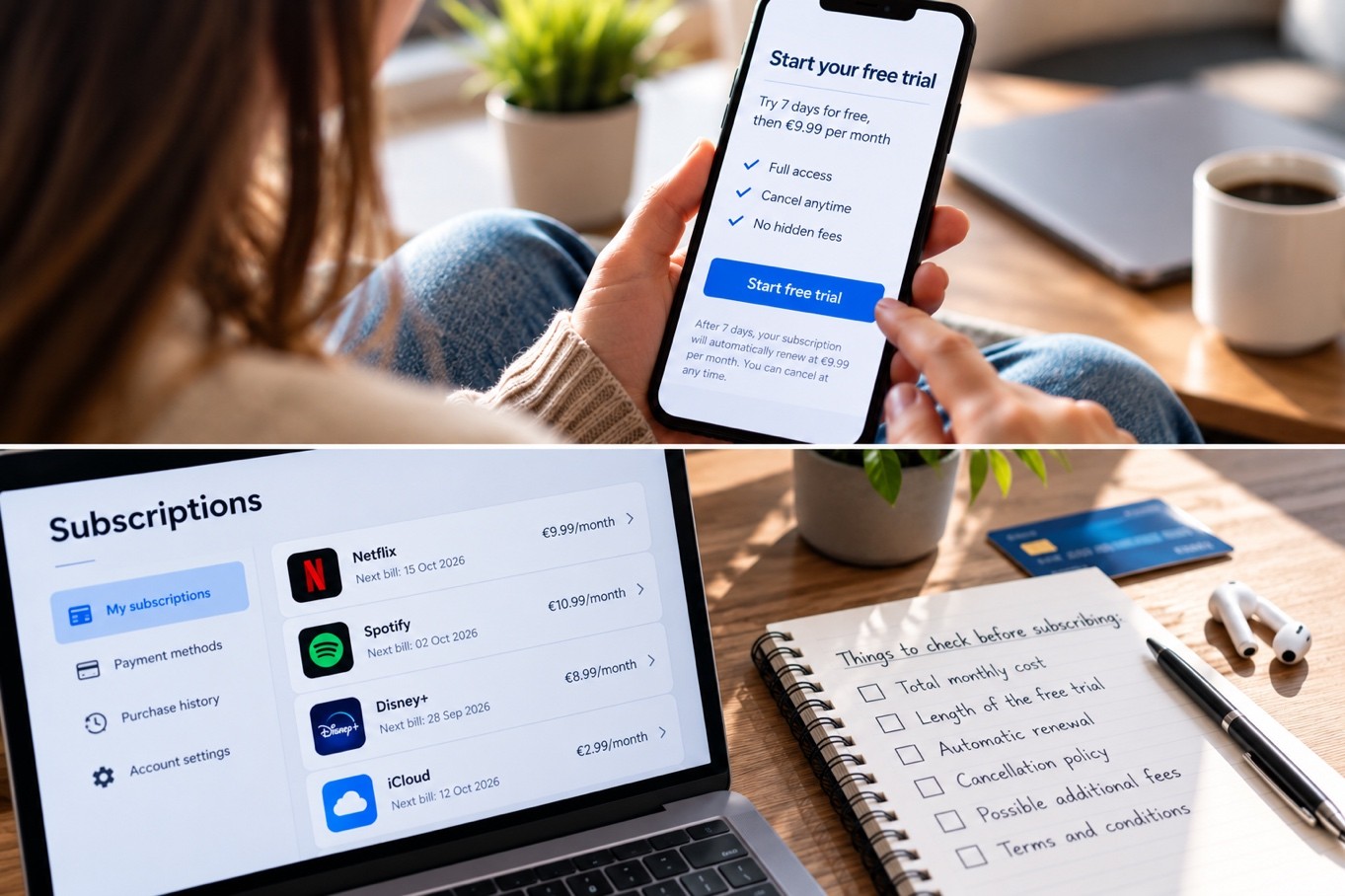
The same applies to in-app purchases, which are particularly common in apps and video games. A purchase of just a few euros may seem insignificant when considered on its own, but the ease with which multiple transactions can be made can make it more difficult to keep track of how much is actually being spent. Learning to monitor digital spending therefore means becoming more aware of one’s own spending habits.
The aim is not to avoid technology or digital services, but to learn how to use them more consciously. Before accepting an offer or entering payment details, it can be useful to stop and ask a few simple questions: How much does the service actually cost? For how long? Is the subscription automatically renewed? Are there any additional costs? How can I cancel it? What terms and conditions am I agreeing to?
This is precisely where the PROFIT project comes in, promoting financial education that is closely connected to young people’s real-life experiences. Understanding the consequences of financial decisions, including those made through a smartphone or digital platform, is an integral part of learning how to manage money.
Financial education, therefore, is not only about saving or managing a budget. It also means learning to read, compare and understand what we are agreeing to before spending money. In a world where making a purchase is becoming increasingly easy, taking a few moments to read the details can be one of the simplest ways to become more financially aware.